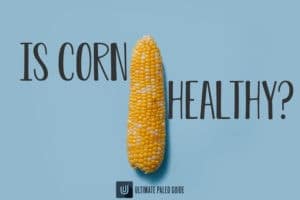
As a cereal grain, corn is not considered Paleo. That's just the truth of the matter.
But here at Ultimate Paleo Guide - we believe that it's incredibly important to be knowledgeable on all types of foods. And we get questions about corn all of the time.
Rightly so - it's a staple food in America.
If you follow Paleo (and you probably do somewhat since you're reading this site...), corn is off the table. But that doesn't mean you shouldn't be informed on what corn actually is - and if it's "healthy" or not.
That's the goal of this article. If you want to read all about why grains, like corn, aren't considered Paleo - check out our article all ...
continue reading
What Is Epsom Salt?
Epsom salt is a commercial name for magnesium sulfate. Magnesium sulfate is a mineral that can be found naturally or manufactured.
Magnesium itself is a mineral that is found within plants, animals, and human beings. It is also one of the most common elements inside the Earth’s crust.
In our bodies, almost all magnesium is found within our soft tissues, muscles and bone. These magnesium reservoirs are important for many vital processes.
It helps to stabilize enzymes that are vital for essential functions, such as muscle contraction and protein synthesis.
Bone formation, heartbeat, and brain activity are also reliant on magnesium ...
continue reading
All About Activated Charcoal
What is Activated Charcoal?
Activated charcoal is a compound that is made from selected raw materials. Also known as activated carbon, it can be made from any carbonaceous raw material.
These consist of any materials that contain carbon, such as coconut shells, wood, or coal.
To “activate” the selected material, it is subjected to a specialized treatment process. The activation itself involves innate chemical and physical changes.
First, the carbonaceous substance is burnt without any oxygen at high temperatures.
Any heat-sensitive (volatile) compounds are stripped away, leaving a carbon skeleton – or “char”.
This char is then ...
continue reading
Should You Ditch Your Low Carb Diet?

In light of the recent study published in The Lancet, you may be asking yourself if you should ditch your low carb diet altogether.
And how can you not when headlines such as...
“Study links low-carb diets with early death”
“Low carb diets shorten your life unless you are mostly vegetarian …”
And
“Low-carb diets could shorten life, study suggests”
...scream at you from your computer screen?
I’m here to tell you - not so fast. As with literally anything that comes out in the mainstream media today, you have to really look at the content - not just the headlines. This is imperative in the age of clickbait and attention-grabbing ...
continue reading
Grocery Store Exploration: Celtuce
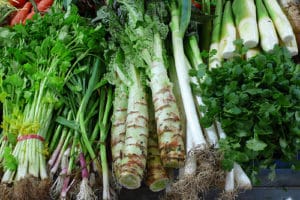
What is Celtuce?
Celtuce is a cultivar of lactuca sativa, variations including augustana, angustata or asparagina. Cultivars are plants that are produced with deliberate, selective breeding.
Lactuca sativa consists of different types of lettuce, which all belong to the Asteraceae family of flowering plants.
The name “celtuce” is a combination of celery and lettuce. This is due to the fact that celtuce has physical characteristics of both vegetables.
The stalks of the vegetable resemble those of celery. The head of the plant has full, wide leaves that resemble lettuce.
Celtuce also goes under other monikers: stem lettuce, ...
continue reading
Dragon Fruit…Pink Fruit…What IS That?!
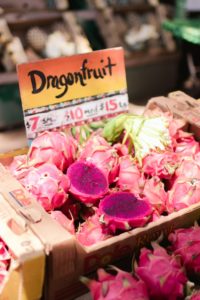
What is Pink Fruit/Dragon Fruit?
Hylocereus undatus (also known as pink fruit or dragon fruit) is a member of the Cactaceae family. This includes all species of climbing cacti.
The scientific Latin name of the fruit is derived from several words. Hyle means woody, ceurus is waxy, and undatus describes something wavy.
As a type of cactus, hylocereus undatus thrives in dry climates. These plants produce fruits in four to six cycles per year.
This plant is referred to by names referencing its large, white flowers which bloom only during the evening. These include: moonflower, Cinderella plant, and Lady of the Night.
The oval-shaped ...
continue reading
Your Guide to Tilapia

Tilapia is a go-to fish for a lot of people because of its relatively cheap price point, mild flavor, and availability. But as with most animal-based protein sources, quality and sustainability is a main concern with this tasty fish.
This guide covers the basics of tilapia and some things to keep in mind if you want to include it in your diet.
What is Tilapia?
Tilapia is a name that is used to describe fish from the Cichlid family. This consists of thousands of different species.
The majority of Cichlid fish are freshwater originating from Africa. An estimated 900 to 1,300 species fall under this category.
Certain types also ...
continue reading
All About Oregano Oil

What is Oregano Oil?
Oregano oil is a type of oil that is prepared from the herb oregano. Also known as Origanum vulgare, this perennial plant is a part of the mint family.
The plant has oval leaves and clusters of flowers, ranging from pure white to pink or violet.
Oregano can be cultivated as ornamental (for its attractive flowers) or culinary variety. The culinary varieties are grown for their flavorful leaves.
Ornamental types of oregano tend to taste blander, and are not recommended for use in cooking. (Source)
Read Our Guide To Essential Oils
The History of Oregano
The name oregano translates from Greek as “joy of ...
continue reading
Coconut Butter: The Ultimate Guide
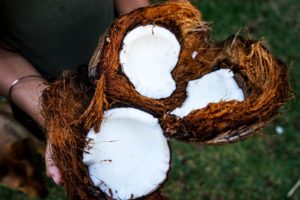
What is Coconut Butter?
Coconut butter is essentially butter that is made from the flesh of a coconut. The white coconut flesh is blended or mashed to create a thick spread.
Before we go into more detail about coconut butter, let’s cover the key (and only) ingredient: coconuts!
[color-box color="blue"]Read our guide to coconut oil here[/color-box]
Coconuts are the fruit of the cocos nucifera, a type of palm. Despite the misleading name, coconuts are actually classed as a type of drupe fruit.
These include any fruit with a seed that is enclosed by a stony layer, such as olives or peaches.
Drupe fruits of any sort – including ...
continue reading
The Ultimate Guide To Intermittent Fasting

Paleo, Ketogenic, Carb Backloading, “If It Fits Your Macros”, Intermittent Fasting.
With so many different nutrition paths, it gets a little confusing - and rightfully so. The biggest take away from nutrition is that is it 100% individual. No one path will work for everyone. That is why education on all of them is so important.
Today we are going to talk about Intermittent Fasting.
What Is Intermittent Fasting?
[In a nutshell] Intermittent Fasting (IF) is an eating sequence that goes back and forth between periods of fasting and periods of eating. Notice the description is still relatively vague. That is because it is not black and ...
continue reading